If you're comparing LGBTQ life coaching services, most of what comes up is a directory listing: a headshot, a price, "sessions available online". That tells you what it costs. It tells you nothing about what you'd be paying for, or how to spot a coach who will actually move something versus one who will just be nice to you.
So here's mine, plainly. A free 15-minute intro call, a 90-minute first session for $125, then six weekly sessions for $750 or twelve for $1,400. Video from anywhere, or in person in Asheville. Below is what each of those is, how online sessions work, the questions I'd ask any coach before paying them, and what actually happens in the room.
What I offer and what it costs
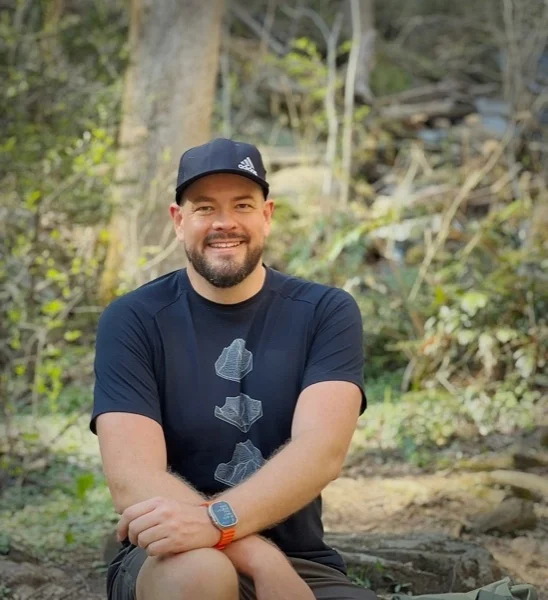
I'm Johann. I'm a queer coach based in Asheville, NC, and I came out later in life. Most of the people I work with meet me over video.
- Intro call, 15 minutes, free. No commitment, no pitch. We see whether this makes sense. If there's a better resource for what you're carrying, I'll tell you.
- Clarity Session, 90 minutes, $125. The first paid session. We get into the actual situation: where you are, what's in the way, what the work needs to be. By the end, we both know what comes next.
- Core, 6 weekly sessions, $750. For one specific thing that needs to shift.
- Deep Work, 12 weekly sessions over three months, $1,400. For when you know there's more under the surface and you're ready to stay with it.
We decide between Core and Deep Work at the end of the Clarity Session, once we both know what you're working on. Packages are paid upfront and aren't refundable, and I need 24 hours' notice to cancel or reschedule. There's no curriculum, no homework and no modules. The same details are in the pricing section on the homepage.
Sessions run over video from anywhere, in person in Asheville and across western North Carolina, or as walk-and-talk sessions on trails around Asheville. Moving tends to loosen things that stay tight in a chair, which is why some people prefer it.
How online sessions work
Same conversation, over video. For a lot of people online is the better option: you're not out, you live somewhere with little queer community, or you'd rather not be seen walking into anyone's office.
If you're not out, how you make contact matters as much as the session. Texts to 828 201 4226 go to my own phone and I answer them myself, usually the same day. I reply from a normal number, so nothing on your screen says Feral Self, and I don't add you to a mailing list. If texting isn't safe, email johann@feralself.com instead. You don't need a label or a plan to get in touch. One sentence about what's going on is enough.
What to ask any LGBTQ coach before you pay
Life coaching is unregulated. Anyone can call themselves an LGBTQ life coach, put a rainbow on the site and charge for it. A price and a headshot won't tell you much. These questions will, and any decent coach, me included, should answer them without squirming.
Are you queer, and have you lived any version of what I'm dealing with?
A coach who has done their own version of this work doesn't need you to spend session time explaining what it means to come out at 42 or what religious shame feels like in the body. You skip straight to the work.
What happens in the first session, specifically?
A vague answer predicts vague sessions. You should leave the first paid session knowing what you're working on and roughly how long it will take.
What does a package commit me to?
Number of sessions, how often, the cancellation policy, and whether it's refundable. Hear all of that before you pay, not after.
When would you tell me I need a therapist instead?
If the answer is "never", walk away. Therapy is clinical care from a licensed clinician. Coaching is for people who are not in crisis and want to move forward on something specific. I'm a coach, not a therapist. Therapy does work I'm not qualified to do, I'll tell you if I think that's what you need, and a lot of my clients do both. If you're in crisis, get clinical support first. There's a longer comparison in coaching vs. therapy.
Who sees my messages?
If you're not out, ask this before you send anything personal. A shared inbox, an assistant or an automated follow-up sequence can all put your name in front of someone you didn't choose.
What comes up in sessions
Mostly the things people have been managing alone. A coming out conversation that feels too risky to have, or one that already happened and went badly. The gap between knowing who you are and acting from that knowledge in ordinary life. A religious background that keeps surfacing as shame long after the belief itself is gone. A relationship built around a version of you that wasn't complete. A career chosen for someone who doesn't quite exist anymore.
Some sessions are about the immediate thing: the conversation that needs to happen, the relationship at a decision point, the job that no longer makes sense. Some are about what's underneath it, which usually comes down to: who am I now, and what does that mean for how I live? Both are what the sessions are for.
What a coach actually does
You don't describe your situation and get told what to do. You've had plenty of advice already.
A good coach asks better questions than the ones you've been asking yourself. Most of us have been stuck on one version of a question for years, and the way we're asking it is part of what keeps us stuck. My job is to hear the question you're asking and find the one underneath it.
The other half is naming where things came from. A lot of queer adults carry beliefs about themselves that feel like personal failures. I'm too scared to come out fully. I keep sabotaging relationships. I don't feel entitled to want what I want. Those beliefs have sources. Specific environments installed them, for reasons that had nothing to do with your wellbeing. Once you can see a belief as something that came from outside you, you can question it. That's a big part of the work. Here's more on how I do queer coaching.
Who this is for
Adults who are in the middle of something. Not at the beginning of knowing anything about themselves, not through it either. The middle is where most people are when they finally look for help.
That could be coming out at 38 while still married. Being out for years and still running on beliefs that were installed long before. Leaving a church and not knowing yet who you are without it. Still sorting out whether the word is gay, lesbian, bi, queer or something else while everything else is already moving. Trying to work out what you want from relationships in a culture that only has templates for one kind.
A lot of the people I work with came out late, after a whole life was already built, and found that most queer resources assume you did this at 22. I've written about gay men coming out later in life, and the same gap is there for anyone of any gender who had a marriage, a career or a congregation first. That gap is a big part of what I do.
If you're still working out whether now is the time, that's what the free intro call is for. Book it here, or text 828 201 4226 with one line about what's going on.