Most people searching for a life coach in western North Carolina are not looking for help hitting their productivity goals. They're in the middle of something that doesn't have a clean name yet: they left a church and the silence afterward is louder than expected; they came out, or are thinking about it, and the life they built doesn't fit the person doing the living; they've been performing a version of strength their whole lives and they're tired. They want someone who understands what they're actually carrying, not someone who will hand them a framework and call it coaching.
That person exists in WNC. But most coaching pages here won't tell you that directly, so let me.
Coaching for life transitions is not the same as therapy, and the difference matters more than the industry usually admits. Therapy is oriented toward the past: what happened, how it shaped you. Coaching starts from a different position. It assumes you're functional, not broken. The question isn't what damaged you but what you're building now and what keeps getting in the way. For a specific set of situations -- coming out at forty, leaving a high-control church, trying to figure out what a life looks like when the one you planned no longer applies -- coaching is not a lesser option. It's a different tool for a different moment.
A coach does not diagnose. A coach does not treat a presenting disorder. What coaching does is hold you accountable to the version of yourself you say you want to be, ask questions you're not asking yourself, and stay focused on what moves you forward rather than what explains where you are. If you're a man in your mid-forties who's been out for two years after a long marriage and you've already done some therapy, more excavation might not be what moves you. What moves you might be someone asking harder questions about what you keep avoiding and what you actually want your life to look like. That's the work.
A coach does not diagnose. A coach does not treat a presenting disorder.
Religious trauma recovery is one of the most underserved areas in coaching anywhere, and WNC is no exception. Most coaching pages here redirect anything that sounds like "trauma" back to therapy and leave you in a gap. But leaving a high-control religious environment is a life transition. It's not only a wound. You lose a community, a framework for meaning, often a family system. You may have spent decades being told that a core part of who you are was wrong. What that work looks like in a coaching context -- as distinct from a clinical one -- is what I write about here.
Coming out later in life has a particular texture that generic coaching rarely addresses. There's a meta-analysis by Hall, Dawes, and Plocek (2021) showing that LGBQ people self-identify at around 17.8 years on average but don't come out to others until around 19.6 -- and that's for people coming out young. For people coming out at thirty, forty, or fifty, the private years stack up for decades. The life you built in those years -- the marriage, the career, the friendships, the version of yourself people know -- still exists. Figuring out what stays and what goes, who gets told and when, how to hold the grief and the relief at the same time: that requires forward-facing, specific work. A coming out coach in North Carolina who actually knows this territory is not the same as a general life coach who's willing to try.
The same is true for masculinity coaching. Men renegotiating what strength is allowed to look like -- men who grew up in evangelical homes, in athletic cultures that had one template -- aren't asking productivity questions. They're asking permission questions. Permission to want something different. Permission to be uncertain. That's not a goal-setting conversation, and finding a coach in Asheville who can hold it without flinching makes a material difference.
Western North Carolina draws people who came here specifically to leave somewhere else -- a conservative town, a church, a marriage, a version of themselves that stopped fitting. The coaching landscape here reflects that, to a degree. But a lot of what's available is still generic: goal-setting, wellness language, life domains. The practitioner who has lived through religious deconstruction or coming out later, and can coach from the inside of that experience rather than the outside, is harder to find.
When you're talking to a prospective life coach in western North Carolina -- or anywhere -- a few questions cut through quickly. Ask them how many clients they've worked with who are navigating religious deconstruction. Ask whether they approach coming out as a life transition or a mental health issue. Ask what they mean when they say "queer affirming." A good queer affirming coach in western North Carolina isn't just someone who won't say anything homophobic -- it's someone who understands the specific terrain of closeted religious life, late coming-out, chosen family, and what it costs to have kept a secret that big for that long. The answer to these questions tells you fast whether you're talking to someone who has done the reading or someone who has lived it.
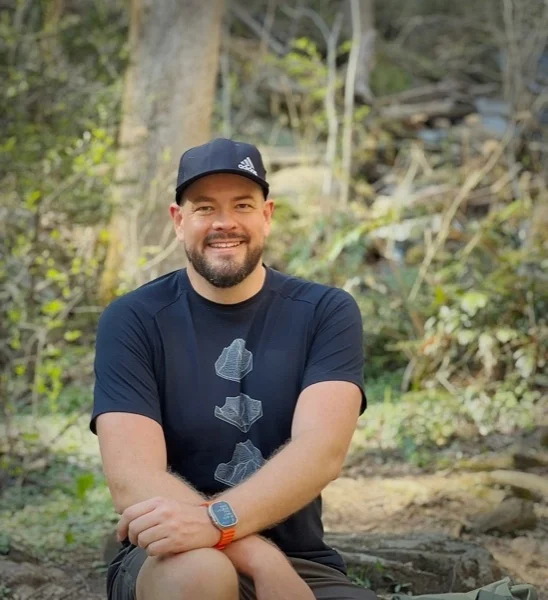
There's also the format question. Walk-and-talk sessions in WNC are different from a Zoom call in ways that are hard to explain until you've tried it. Something about moving through this particular landscape loosens things that sitting in a chair keeps locked. The body does some of the work the mind is too defended to do on its own. A 2014 study from Mayo Clinic Proceedings found that coaching completers showed significant improvements across all five quality-of-life domains, with gains maintained at 24-week follow-up. The container matters.
Most people reading this are not in crisis. They're at a threshold. Something has already changed without their permission, or they know it's coming. The work is available. The question is whether you're ready to do it.