When one partner comes out, both people's understanding of the relationship changes at once. Not sequentially. Not after a period of reflection and adjustment. Simultaneously, on a Tuesday, with no warning that this was the kind of Tuesday it would be.
Relationship transition coaching, as most practitioners offer it, was built for a different situation. The breakup that's been coming for two years. The divorce where both people already know something is over. The new relationship that needs a better foundation than the last one. These are real problems worth solving, and there are plenty of capable life transition coaches doing that work. But when someone comes out (to their partner, to their family, to themselves), they're not in a breakup. They're in something with no established script and too many moving pieces to count, and a coaching model designed around clean beginnings and endings doesn't fit what they're carrying.
The mismatch isn't small. It shapes everything: what questions get asked, what the work is oriented toward, what counts as progress. A coach working from the breakup model will tend to focus on grief, on communication, on what each person needs going forward. Those things matter. But they miss the engine of the transition. When someone comes out, identity is the thing moving, not just the relationship. And if the coaching doesn't start there, it's solving for the wrong problem.
Coming out isn't one transition. Research on couples in which one partner disclosed gender identity found that they faced simultaneous challenges across three distinct relational territories, all active at once: sexual identity and relationship uncertainty, transition decision-making, and managing public presentation under social pressure. That's the actual terrain. Not a single event to process but a cluster of overlapping shifts, each with its own timeline and its own cost. The relationship with your partner. The relationship with your family. The relationship with whatever community you've been part of. The relationship with yourself, which has been quietly renegotiating its terms for years before the conversation happened. Queer relationship coaching that treats this as a single-axis problem is going to miss most of what's happening.
Add religion and it gets more complex. For someone who grew up evangelical, Mormon, or Catholic, the relationship's rules weren't written by the two people in it. They were handed down. The terms of fidelity, the meaning of marriage, the shape of gender within the partnership: all of it came from somewhere outside the relationship. When a person starts deconstructing that framework, they're not just changing their beliefs. They're dismantling the contract their relationship was built on, often without their partner knowing the renovation is happening. Religious deconstruction coaching that stays in the spiritual lane and doesn't account for the relational fallout of leaving a faith system is addressing only half of what's in motion. The other half is sitting across the kitchen table from someone who still believes what you used to.
Then there's the person who isn't coming out and isn't deconstructing anything, but whose relationship is changing because the structure of it is changing. Opening a marriage. Shifting toward polyamory or ethical non-monogamy. This gets treated, by most coaches and by most of culture, as a crisis indicator. The assumption is that it happens when a relationship is failing. That framing is wrong, and it's worth saying directly. Non-monogamy coaching that actually serves people navigating a deliberate structural shift needs to meet them there, as people making a considered choice, not as patients in a failing-relationship emergency. Longitudinal research on relationship transitions found that relationship changes were associated with the onset of substance disorders, with mood disorders showing a bidirectional relationship. Relationships aren't inherently destabilizing. Transitions without support are. And that cost is real whether the transition is a breakup or a deliberate opening. The difference is whether the support you're getting was designed for you.
Relationships aren't inherently destabilizing. Transitions without support are.
What identity transition coaching does differently is start with the person, not the event. Not "what happened to your relationship" but "who are you becoming, and how does that change what you need your relationships to be." That's a harder question. It doesn't resolve in six sessions. But it's the question that actually fits the situation for a queer person in the middle of coming out, for someone whose faith exit is rewriting every relationship they have, for someone who's realizing that the relationship structure they agreed to in their twenties doesn't fit who they are now.
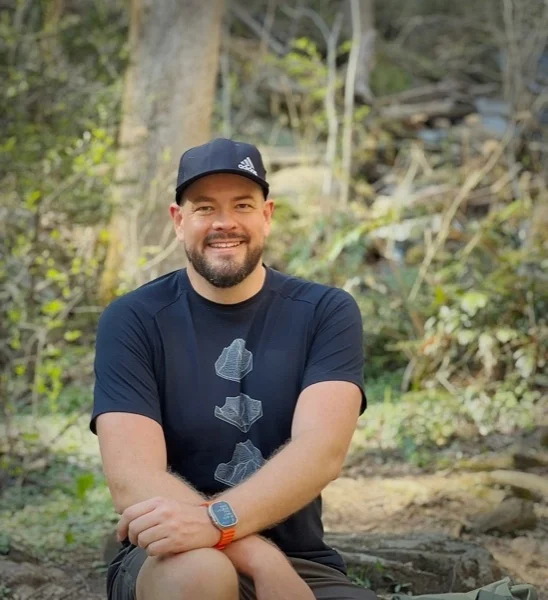
This is the work I do as a coming out coach and as a coach for people navigating queer relationships, religious deconstruction, and the overlaps between them. If you're based in Western North Carolina, sessions can be walk-and-talks out in the mountains, away from a screen, which turns out to be a better environment for some of this than a room. If you're elsewhere, it works remotely. Either way, the starting point is the same: figuring out what kind of transition you're actually in, not the one the model assumes you're in.
Most relationship transitions don't look like what the coaching industry prepared for. The people who need this support most clearly are the ones the standard model fits least.