Most people coming out in North Carolina weren't raised in San Francisco. They were raised in churches, in families where certain questions weren't asked out loud, in towns where the options were conformity or exile. Finding a coming out coach in North Carolina who understands that specific terrain matters more than most coaching directories will tell you.
The dominant coming-out coaching market was built for a different starting point. It assumes some baseline cultural permission, some access to community, some prior exposure to queer people living openly. The major coaching programs out there, good ones doing real work, are largely built for people who've already got one foot out the door and need help with the logistics of the rest. They're built for someone who has a friend group that will take it in stride.
That's not most people in North Carolina. Especially not the ones who grew up evangelical, or in high-control religious communities, or in families where the church was the social infrastructure. For those people, coming out is a reckoning with the community that raised them, the theology that told them who they were, and the decades of silence they built around something they knew but couldn't say.
A 2025 study in the Journal of Homosexuality found that among 429 participants, 59.2% said religion was a factor in suppressing their sexual orientation. The fear, shame, and rejection from religious organizations weren't incidental to their experience. Those were the walls.
What this means practically is that the suppression wasn't just personal. It was structural. Someone helped build it. A community reinforced it. A theology named it sin. Coaching that treats coming out as a purely psychological process, a matter of working through inner blocks, misses the fact that those blocks were installed by a system that had social and institutional weight behind it. Coaching that gets this doesn't just help someone figure out how to tell their family. It helps them understand what they were up against, why it took this long, and why that's not a failure.
And often it did take a long time. Research published in Developmental Psychology tracking three generations of sexual minority adults found that the oldest cohort, now in their 50s and 60s, came out to family around age 26 on average, compared to around 16 or 17 for younger generations. That gap is generational and cultural. Someone coming out at 40 or 50 in North Carolina isn't behind. They were in a different environment, with different stakes, different consequences for being found out. A coming out coach who works with adults later in life has to understand that timeline and stop treating it as delay.
Someone coming out at 40 or 50 in North Carolina isn't behind.
The practical difference shows up in how sessions actually run. Coaching from a script designed for a 25-year-old in a city skips over decades of accumulated life. There's a marriage, sometimes. Kids. A career built inside a religious community. A social world that is entirely structured around a version of yourself that wasn't quite true. The questions become "what do I do with all of this" instead of "how do I come out to my parents."
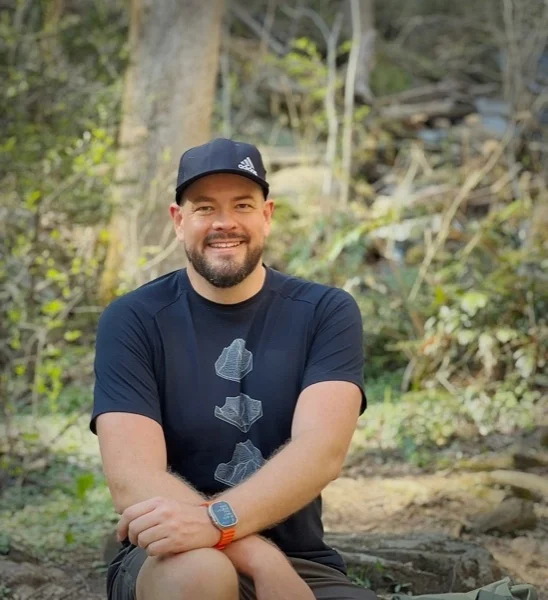
This is the work I do in Asheville. Queer coaching that's grounded in real place, sometimes literally outdoors, working through all of what coming out actually looks like when it comes with a full life already built around it. The mountains here have a particular quality for this kind of conversation. There's room. Asheville has a larger queer community than most of NC, but the people I work with often come from somewhere else in the state, or from parts of the South that have no queer infrastructure at all. They drive here or we work across distance. They need someone who knows the specific weight of what they've been carrying.
Coming out support for men gets even less attention in the coaching world, which skews heavily toward women. Gay men, bi men, men still questioning, particularly those from religious backgrounds, carry a specific set of cultural pressures that don't always map onto the frameworks designed for other groups. Masculinity and religion tend to compound. The silence goes deeper and gets harder to name.
If you're in North Carolina and you've been circling this for years, the problem was never that you weren't ready. The architecture that was built around you was very good at its job.