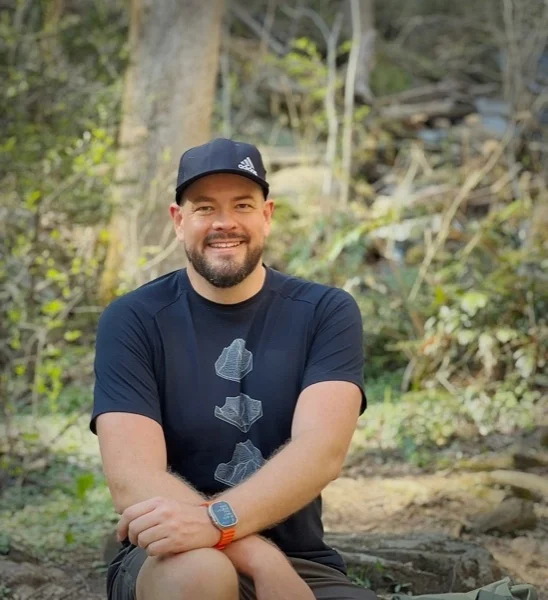
A man in his forties, life more or less assembled, sits with the quiet sense that something has been wrong for a long time.
The wrongness has no clean origin. Career is fine. Family is okay. The correct number of things got accomplished. And yet. Coaching for men tends to start here, not at rock bottom or in crisis, but somewhere in the middle of a life that functions and still feels off.
Most coaching industries skip past this to the part where they tell you what to optimize. More confidence. Better habits. A sharper morning routine. Those things are fine. They're also downstream of a question most coaching for men never gets to: where did the self you're optimizing come from, and does it actually belong to you?
A lot of men are running a version of themselves that was written by someone else. The script came from somewhere specific. A church that handed you a definition of a good man before you were old enough to question it. A father who modeled strength as the absence of need. A culture that taught you which feelings were acceptable and which ones meant something was wrong with you. Life coaching for men often treats these as background context, minor forces to be acknowledged before getting back to goals. But for a certain kind of man, those forces are the whole situation. The script is so well-worn it feels like personality. It takes a while to realize you've been performing a character rather than living a life.
This isn't dramatic. Most men can't even locate the moment they agreed to it. The blueprint just arrived, and they built on top of it, and one day the structure stopped making sense even though everything was technically standing.
The men's life coach industry, such as it is, leans heavily toward men's mindset coaching repackaged as productivity advice. Purpose. Direction. Getting out of your own way. The problem with this framing is that it takes the existing structure for granted. It says: here's how to perform your life better. It rarely asks whether the role itself was ever yours. Plenty of men have worked very hard to excel at a version of their life they never actually chose.
Plenty of men have worked very hard to excel at a version of their life they never actually chose.
The gap shows up in a particular way when men's coaching claims to cover emotional intelligence, relationships, and identity. The content is usually there. Queer men are not. Men who left religion and can't figure out what they believe now are not. Men who grew up with rigid gender scripts and now find those scripts actively making things worse are not. The coaching that exists for men tends to imagine one kind of man: straight, secular, mainly concerned with career and marriage. If you're gay and just starting to name that at forty-two, the existing genre of men's coaching has almost nothing for you.
What the work actually looks like, when it goes after the blueprint, is less polished than most coaching sites suggest. You spend time in the origin story. Not to assign blame, but to understand where the instructions came from and what they cost. You find out which beliefs you've been running on autopilot. You ask what you actually want when the approved list of wants gets set aside.
For men who came up in high-control religion, this involves pulling apart what was taught as truth and figuring out what, if anything, still holds. For queer men who spent years managing how they presented themselves, coaching for queer men specifically means examining the energy that went into suppression, and what happens when it gets redirected. For men who inherited a version of masculinity that asked them to be impervious, the masculinity coaching piece is usually about learning what they actually feel, which sounds simple and isn't. A meta-analysis of coaching outcomes published in Frontiers in Psychology found significant positive effects on self-efficacy, psychological capital, and resilience. That lines up with what this kind of work produces, though the mechanism is less about executive skill-building and more about men getting clear on who they are outside the script.
The work isn't linear. Some men come in knowing exactly what they're trying to get at. More often, they start somewhere practical. A relationship, a career decision, a feeling they can't shake. The blueprint shows up on its own about six weeks in.
Asheville coaching is having a specific cultural moment, and it's not accidental. The city draws people who left somewhere, religiously or geographically or both, and are working out what comes next. You see it in the coffee shops, the trails, the conversations that go deeper than you expected. There's a density here of people in the middle of exactly this kind of reckoning. That context matters for doing this work. It's easier to examine what you were handed when you're around other people who are doing the same thing.
The men who find their way to this work usually know some version of the question before they can articulate it. They're not asking how to do their life better. They're asking whether the life they've been doing is theirs.
That question is worth taking seriously.